The Art of Serenity: Blending Japandi Style with Sustainable Interior Design for Modern Living
In a world where clutter and chaos often dominate our daily lives, the allure of minimalist living rooms and serene, thoughtfully designed spaces has never been stronger. The fusion of Japandi style bedrooms and sustainable interior design offers a harmonious escape, where simplicity meets sophistication, and every element serves a purpose. This approach to home decor isn’t just about aesthetics—it’s a lifestyle choice that prioritizes mindful living, functionality, and a deep connection to nature.
The Philosophy Behind Japandi Style
Japandi, a portmanteau of Japanese and Scandinavian design, is more than just a trend—it’s a philosophy that celebrates the beauty of imperfection, the warmth of natural materials, and the tranquility of uncluttered spaces. At its core, Japandi style embodies the Japanese concept of wabi-sabi, which finds beauty in asymmetry and the passage of time, while also embracing the Scandinavian principle of hygge, or coziness. The result is a space that feels both calming and inviting, where every piece of furniture and decor is chosen with intention.
In a Japandi style bedroom, you’ll often find clean lines, a neutral color palette, and an emphasis on craftsmanship. Wooden furniture with a light or medium tone—such as oak, ash, or walnut—dominates the space, paired with soft textiles like linen or wool to add warmth. The key is to create a sense of balance, where each element complements the other without overwhelming the senses. Think of it as a visual breath of fresh air, where less truly is more.
Sustainable Materials: The Heart of Japandi Design
One of the most compelling aspects of Japandi style is its commitment to sustainable interior design. In a world grappling with environmental challenges, choosing materials that are eco-friendly, durable, and ethically sourced is not just a design choice—it’s a responsibility. Japandi interiors often feature furniture made from reclaimed wood, bamboo, or cork, all of which are renewable and have a lower environmental impact than traditional materials like plastic or mass-produced particleboard.
Textiles also play a crucial role in sustainable Japandi design. Organic cotton, hemp, and recycled fabrics are preferred for bedding, curtains, and upholstery, as they are free from harmful chemicals and biodegradable. Even the finishes on furniture—such as natural oils or water-based stains—are chosen for their non-toxic properties. By prioritizing sustainability, Japandi spaces not only look beautiful but also contribute to a healthier planet and a healthier home.
Creating Multi-Functional Spaces in a Minimalist Home
Minimalism isn’t about living with as little as possible—it’s about living with what truly matters. In a minimalist living room, every piece of furniture and decor should serve a purpose, whether functional or aesthetic. This is where the concept of multi-functional spaces comes into play. A sofa that doubles as a guest bed, a coffee table with hidden storage, or a wall-mounted desk that folds away when not in use are all examples of how to maximize space without sacrificing style.
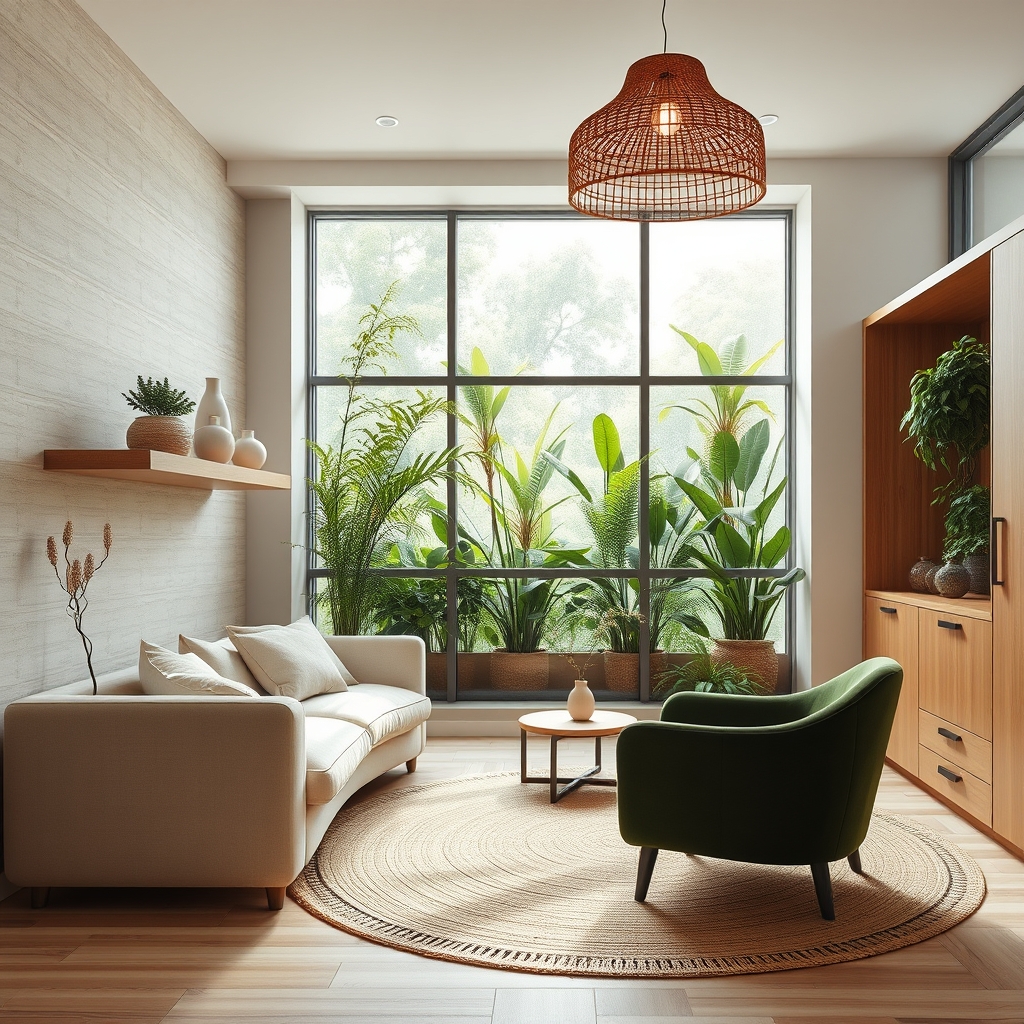
Incorporating floating wall shelves is another clever way to add storage and display space without cluttering the room. These shelves can hold books, plants, or decorative objects, all while maintaining the clean, uncluttered look that defines minimalist design. Similarly, hidden storage solutions, such as built-in cabinets or ottomans with storage compartments, help keep everyday items out of sight, preserving the room’s sense of calm.
Biophilic Design: Bringing Nature Indoors
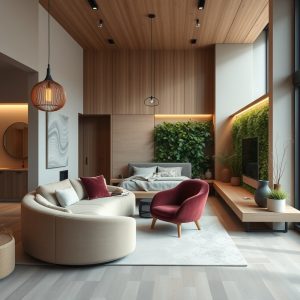
No discussion of modern interior design would be complete without mentioning biophilic home decor, a concept that seeks to strengthen the connection between humans and nature. In Japandi-inspired spaces, biophilic design is often achieved through the use of natural materials, indoor garden walls, and an earthy color palette that mimics the outdoors. Shades of beige, soft greens, warm browns, and muted blues create a soothing atmosphere, while large windows or skylights invite natural light to flood the space.
Plants are a cornerstone of biophilic design, and in a Japandi home, they are chosen for their ability to thrive indoors while adding a touch of organic beauty. Low-maintenance varieties like snake plants, pothos, or fiddle-leaf figs are popular choices, as they require minimal care while purifying the air. For those with a green thumb, an indoor garden wall can transform a blank wall into a lush, living focal point, bringing a sense of vitality and tranquility to the room.
The Role of Textures and Accents in Japandi Interiors
While Japandi style is known for its simplicity, that doesn’t mean it has to be stark or cold. The strategic use of textures and accents can add depth and warmth to a space, making it feel more lived-in and inviting. Textured wallpapers, for example, can introduce subtle patterns or tactile surfaces that break up the monotony of smooth walls. Grasscloth, linen, or even hand-painted wallpapers in neutral tones can add visual interest without overpowering the room.
When it comes to furniture, curved sofa designs and velvet accent chairs are excellent choices for adding a touch of softness and luxury to a Japandi-inspired space. The gentle curves of a sofa can create a sense of flow and movement, while the plush texture of velvet adds a layer of comfort and sophistication. Similarly, statement lighting fixtures, such as a sculptural pendant light or a minimalist floor lamp, can serve as a focal point while enhancing the room’s ambiance.
Lighting: The Unsung Hero of Serene Spaces
Lighting is often overlooked in interior design, but in a Japandi home, it plays a crucial role in setting the mood. Natural light is always the best option, but when that’s not possible, layered lighting can create a warm and inviting atmosphere. Start with ambient lighting, such as recessed lights or a central pendant, to provide overall illumination. Then, add task lighting—like a desk lamp or reading light—to focus on specific areas. Finally, incorporate accent lighting, such as wall sconces or LED strips, to highlight architectural features or artwork.
For a truly Japandi-inspired look, opt for lighting fixtures made from natural materials like wood, paper, or rattan. These materials diffuse light softly, creating a gentle glow that enhances the room’s sense of tranquility. Matte black hardware can also be used to add a modern touch to light switches, cabinet handles, or faucets, providing a subtle contrast to the natural elements in the space.
As our lives become increasingly fast-paced and technology-driven, the desire for spaces that promote peace and well-being has never been greater. The fusion of Japandi style and sustainable design offers a blueprint for creating interiors that are not only beautiful but also meaningful. By embracing simplicity, natural materials, and mindful living, we can transform our homes into sanctuaries that nourish the soul and inspire a deeper connection to the world around us. Whether it’s a cozy reading nook bathed in natural light or a minimalist living room that breathes with tranquility, the art of serenity is within reach for anyone willing to embrace it.