The Art of Design: Where Irony Meets Innovation
In the grand theater of digital design, we are the actors, the directors, and the critics all rolled into one. We dance with User Centered Design Optimization, waltzing through Iterative Interface Improvement, and tangoing with Experiential Design Thinking. It’s a world where Data Informed Design Upgrades are the new black, and Seamless User Experience Enhancement is the ultimate fashion statement.
When Less is More, and More is Less
We live in a time where Intuitive Layout Refinement is the holy grail, and Adaptive Design Solutions are the knights in shining armor. But let’s not forget, dear designers, that Accessibility Focused Improvement is not just a trend; it’s a necessity. It’s like the vegan option at a fancy restaurant—you might not always want it, but it’s there for a reason.
The Science of Behavioral Design Insights
Behavioral Design Insights are the secret sauce that makes our designs tick. It’s the science behind why users click that button or scroll past that ad. It’s like understanding why your cat always sits on your keyboard—it’s not because it loves you, it’s because it loves the warmth and the sound of your furious typing.
Aesthetic Usability Optimization: The Beauty of Function
Aesthetic Usability Optimization is where form meets function. It’s like the perfect pair of jeans—comfortable, stylish, and makes you feel like you can conquer the world. But remember, just because it looks good doesn’t mean it works well. It’s like that fancy sports car that looks amazing but can’t handle a pothole.
Collaborative Design Iteration: The Power of Many
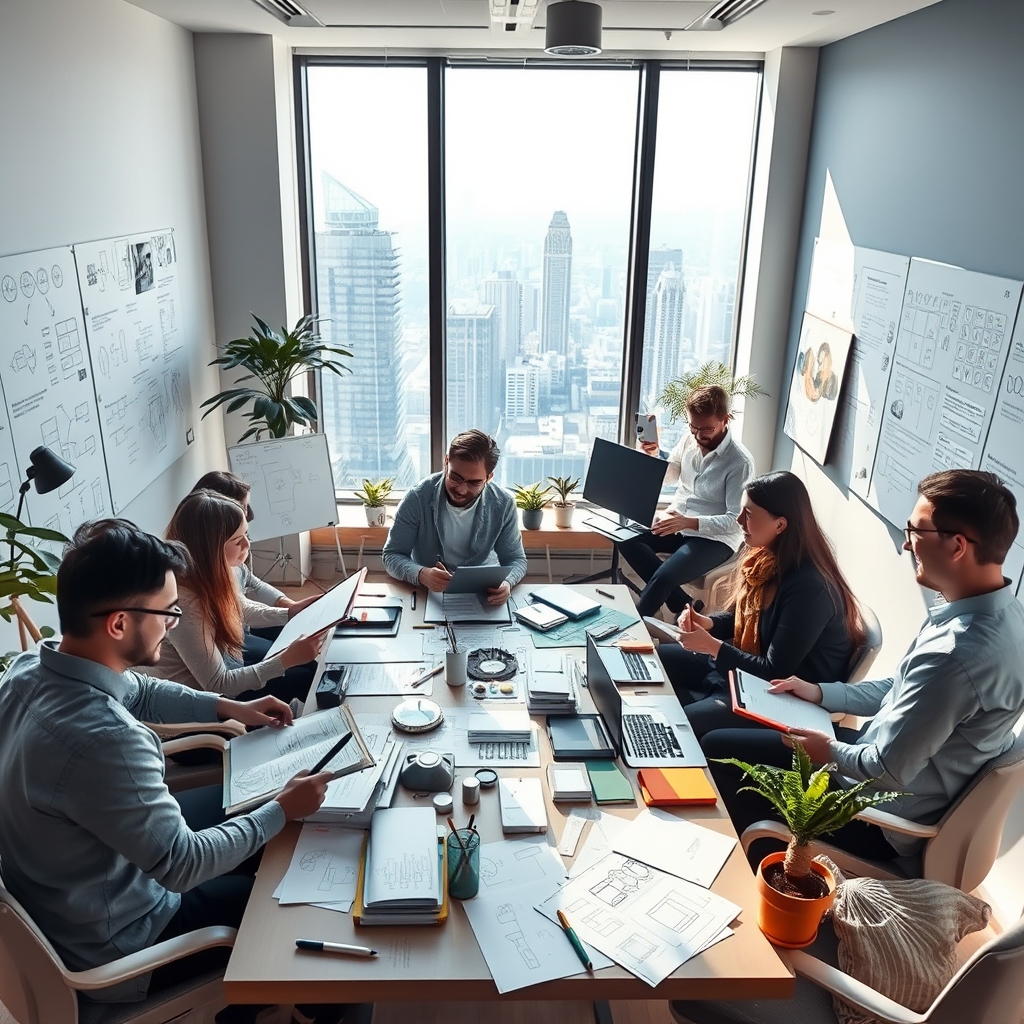
Collaborative Design Iteration is the heart of our craft. It’s where ideas collide, and magic happens. It’s like a good brainstorming session—chaotic, messy, but ultimately, brilliant. And let’s not forget Performance Driven Design Changes. It’s like the gym membership you never use—you know you should, but do you really want to?
Responsive Design Evolution: The Never-Ending Story
Responsive Design Evolution is the never-ending story of our industry. It’s like the latest iPhone update—exciting, but also a little bit terrifying. And Human Factors Integration? It’s the unsung hero of our designs. It’s like the glue that holds everything together, even if it’s not the most glamorous part of the job.
Prototyping And Testing Cycles: The Groundhog Day of Design
Prototyping And Testing Cycles are the Groundhog Day of design. You do it, you test it, you fix it, you do it again. It’s like washing dishes—you never really finish, but you keep doing it because you have to. And Efficient Visual Communication? It’s the art of saying more with less. It’s like a good tweet—short, sweet, and to the point.
Personalized Design Adjustments: The Tailor-Made Experience
Personalized Design Adjustments are the tailor-made experience of our designs. It’s like having a custom suit—it fits perfectly, and it makes you feel like a million bucks. But remember, just because it’s personalized doesn’t mean it’s perfect. It’s like that custom suit that looks great but is a little too tight in the shoulders.
Strategic UI UX Improvement: The Chess Game of Design
Strategic UI UX Improvement is the chess game of design. It’s about thinking ahead, anticipating moves, and always having a plan B. It’s like playing chess with a grandmaster—you might not win, but you’ll learn a lot. And Scalable Design Systems? It’s the backbone of our designs. It’s like the skeleton of a building—you don’t see it, but it’s there, holding everything up.
Feature Enhancement Workflow: The Assembly Line of Innovation
Feature Enhancement Workflow is the assembly line of innovation. It’s about taking something good and making it better. It’s like a good recipe—you start with the basics, and then you add your own twist. But remember, just because it’s better doesn’t mean it’s perfect. It’s like that recipe that’s great but could use a little more salt.
So, dear designers, let’s continue to dance with irony and innovation. Let’s waltz through the world of design, always remembering that it’s not just about making things look pretty. It’s about making things work, making things better, and making things that people actually want to use. Because at the end of the day, that’s what design is all about. It’s not about us; it’s about them—the users. And if we can make their lives a little bit easier, a little bit better, then we’ve done our job. And isn’t that what it’s all about?