
The Silent Revolution: How Scalable Design Systems Drive Seamless User Experience Enhancement
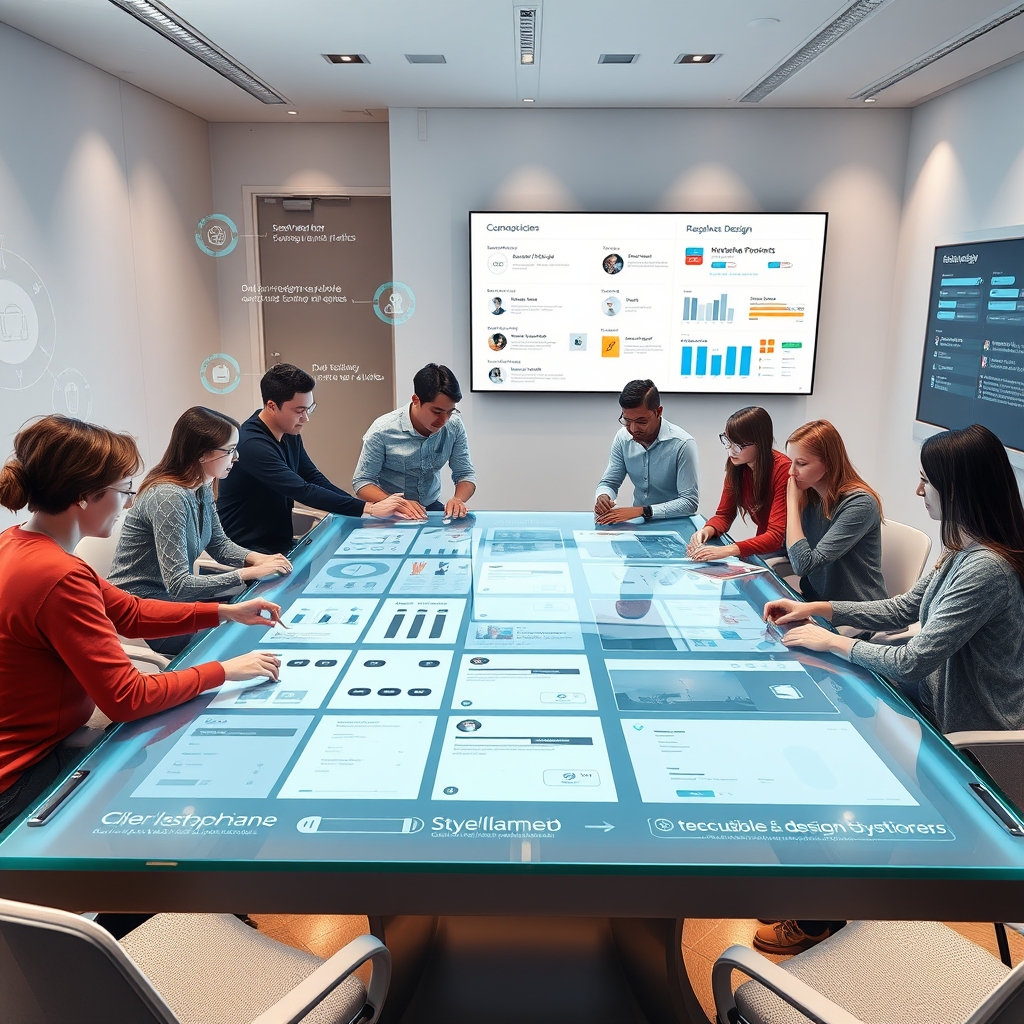
In the fast-paced world of digital product development, the quest for a seamless user experience is never-ending. Teams are constantly balancing innovation with consistency, speed with quality, and creativity with usability. At the heart of this balance lies a powerful yet often understated approach: scalable design systems. These systems are not just collections of reusable components; they are the backbone of strategic UI/UX improvement, enabling organizations to deliver intuitive, adaptive, and high-performing digital experiences at scale.
The Foundation of Consistency and Efficiency
Scalable design systems provide a single source of truth for design and development teams. By standardizing elements such as buttons, typography, color palettes, and interaction patterns, they eliminate redundancy and reduce the risk of inconsistencies across platforms. This consistency is not merely aesthetic—it directly impacts user-centered design optimization by ensuring that users encounter familiar patterns, reducing cognitive load and improving navigation efficiency. When users don’t have to relearn interactions, engagement deepens, and satisfaction rises.
Moreover, design systems accelerate the development cycle. With pre-built, tested components, teams can prototype, iterate, and deploy features faster. This agility is crucial in an era where user expectations evolve rapidly, and the ability to respond with iterative interface improvement can mean the difference between relevance and obsolescence.
Enabling Adaptive and Responsive Evolution
Digital experiences are no longer confined to a single screen size or device. Users interact with brands across desktops, tablets, smartphones, wearables, and even voice interfaces. Responsive design evolution is not just about resizing elements—it’s about rethinking how content and functionality adapt to context. Scalable design systems support this evolution by providing flexible, modular components that can be rearranged, resized, or reconfigured without breaking the user experience.
For example, a well-structured design system might include breakpoints, fluid grids, and adaptive typography that respond to viewport changes. When combined with human factors integration, such as ergonomic touch targets and readable contrast ratios, the result is an interface that feels natural and effortless, regardless of the device. This adaptability is a cornerstone of accessibility-focused improvement, ensuring that digital products are inclusive and usable by people of all abilities.
The Role of Data in Design System Maturity
While design systems provide structure, their true power is unlocked when informed by data. Data-informed design upgrades allow teams to move beyond assumptions and base decisions on real user behavior. Analytics tools can reveal which components are used most frequently, where users drop off, and which interactions cause frustration. These insights enable teams to refine the design system continuously, ensuring that every update enhances usability and performance.
For instance, A/B testing a button’s color or placement within a design system can yield measurable improvements in conversion rates. Over time, these incremental changes compound, leading to significant gains in user satisfaction and business outcomes. This cycle of prototyping and testing</’t stop at the component level—it extends to entire workflows, ensuring that the design system evolves in tandem with user needs.
Collaboration as the Catalyst for Innovation
Design systems are not created in isolation. They thrive in environments where collaborative design iteration is encouraged. When designers, developers, product managers, and even users contribute to the system, it becomes more robust, inclusive, and innovative. Cross-functional collaboration ensures that the system addresses real-world challenges, from technical constraints to user pain points.
Tools like Figma, Storybook, and Zeroheight facilitate this collaboration by providing shared workspaces where teams can document, test, and iterate on components in real time. These platforms also serve as living style guides, making it easy for new team members to onboard and contribute without disrupting the system’s integrity. The result is a design ecosystem that grows organically, adapting to new trends and technologies while maintaining its core principles.
Personalization Within a Unified Framework
One of the most exciting frontiers in design systems is the integration of personalized design adjustments. While consistency is a hallmark of scalable systems, there is also room for customization. Modern design systems can support dynamic theming, user-specific layouts, and adaptive content delivery based on preferences, location, or behavior. This level of personalization enhances experiential design thinking by making users feel seen and understood.
For example, an e-commerce platform might use a design system to maintain a cohesive brand identity while allowing users to switch between light and dark modes, adjust font sizes, or reorder dashboard widgets. These small but meaningful adjustments create a sense of ownership, fostering deeper engagement and loyalty. The key is to balance personalization with usability—ensuring that customization options are intuitive and do not overwhelm the user.
The Future: Design Systems as Living Organisms
As digital experiences become more complex, the role of design systems will only grow in importance. The most successful systems are not static; they are living organisms that evolve through continuous feedback, testing, and iteration. By embedding behavioral design insights and performance-driven design changes into the system’s DNA, organizations can create experiences that are not only functional but also delightful and memorable.
Ultimately, scalable design systems are more than a tool—they are a philosophy. They embody the belief that great design is not a one-time achievement but an ongoing journey of refinement and innovation. When built with care, guided by data, and nurtured through collaboration, these systems become the invisible thread that weaves together every interaction, ensuring that users don’t just use a product—they experience it in a way that feels effortless, intuitive, and profoundly human.