
The Pulse of Progress: How Prototyping and Testing Cycles Fuel Intuitive Layout Refinement
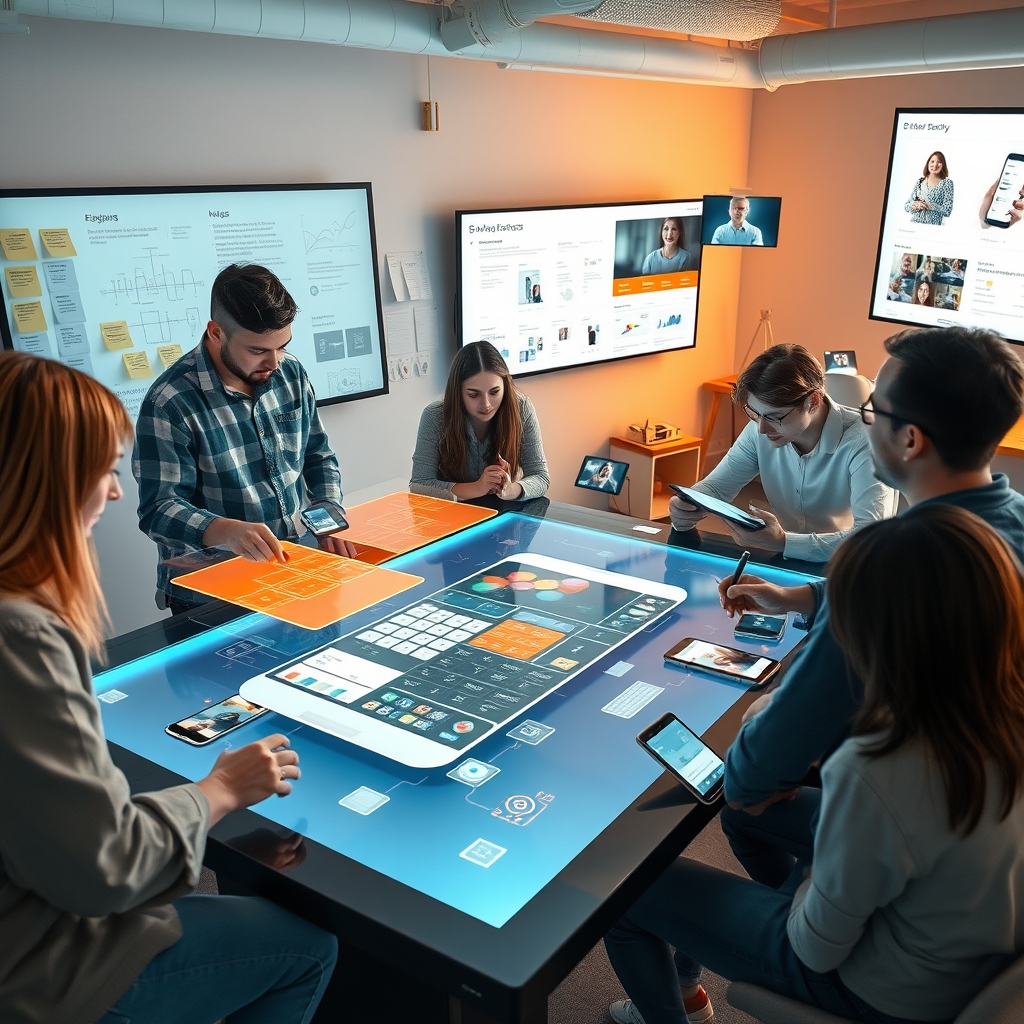
In the ever-evolving landscape of digital design, the bridge between a user’s needs and a product’s functionality is built on the foundation of continuous improvement. At the heart of this process lies a dynamic duo: prototyping and testing cycles, which serve as the lifeblood of intuitive layout refinement. These cycles are not merely steps in a workflow; they are the rhythm that keeps design systems alive, adaptive, and aligned with human behavior. By embracing this iterative approach, designers can transform static interfaces into living, breathing entities that evolve alongside their users.
The Alchemy of Prototyping: Turning Ideas into Tangible Experiences
Prototyping is where abstract ideas take shape, where wireframes and sketches evolve into interactive models that users can touch, feel, and react to. This stage is less about perfection and more about exploration—an opportunity to test hypotheses, uncover pain points, and validate assumptions before investing in full-scale development. Low-fidelity prototypes, such as paper sketches or digital wireframes, allow teams to iterate quickly and cheaply, while high-fidelity prototypes bring concepts closer to reality, offering a near-authentic experience of the final product.
The magic of prototyping lies in its ability to reveal the unseen. A button placed in the wrong corner, a navigation flow that confuses rather than guides, or a color scheme that strains the eyes—these are the nuances that static designs often miss. By creating interactive prototypes, designers can simulate real-world usage, observing how users interact with the interface and identifying friction points that might otherwise go unnoticed. This process is not just about refining aesthetics; it’s about crafting an experience that feels effortless, almost instinctive, to the end user.
The Crucible of Testing: Where Data Meets Design
If prototyping is the alchemy that transforms ideas into tangible forms, testing is the crucible where those forms are refined through fire. User testing, whether conducted in controlled environments or through remote sessions, provides invaluable insights into how real people engage with a design. These insights are not just qualitative—gathered through observations and feedback—but also quantitative, derived from metrics like task completion rates, time-on-task, and error rates. Together, they paint a comprehensive picture of the user experience, highlighting what works and what doesn’t.
One of the most powerful aspects of testing is its ability to challenge assumptions. Designers and stakeholders often fall into the trap of believing they know what users want, only to be proven wrong during testing. A feature that seemed intuitive in theory might confuse users in practice, or a layout that looked sleek in mockups could frustrate users when they attempt to complete a task. Testing strips away these biases, replacing them with hard data and real user behavior. This shift from assumption to evidence is what separates good design from great design.
Behavioral Insights: The Hidden Layer of User Testing
Beyond the surface-level feedback, user testing also uncovers deeper behavioral insights that can inform design decisions. For example, eye-tracking studies might reveal that users consistently overlook a critical call-to-action button, not because it’s poorly designed, but because it’s placed in a low-visibility area. Heatmaps can show where users hesitate or click repeatedly, indicating confusion or frustration. These insights go beyond what users say they want—they reveal what users actually do, often unconsciously, when interacting with a design.
Behavioral design insights are particularly valuable because they tap into the subconscious patterns that drive user actions. By understanding these patterns, designers can make subtle adjustments that have a profound impact on usability. For instance, placing a button where users naturally expect it to be, or using color contrasts that draw attention to key actions, can significantly improve the user experience without requiring a complete overhaul of the design. These small, data-informed tweaks are the building blocks of intuitive layout refinement.
Iterative Improvement: The Cycle That Never Ends
The true power of prototyping and testing lies in their cyclical nature. Unlike a linear design process, where a product is built, launched, and left to stagnate, an iterative approach treats design as a living, breathing entity. Each cycle of prototyping and testing generates new insights, which in turn inform the next iteration of the design. This continuous loop ensures that the product remains relevant, usable, and aligned with user needs, even as those needs evolve over time.
This iterative mindset also fosters a culture of experimentation and innovation. When designers are encouraged to test, fail, learn, and refine, they become more willing to take risks and explore unconventional solutions. This is where breakthroughs happen—not by playing it safe, but by embracing the unknown and using each iteration as an opportunity to push the boundaries of what’s possible. Whether it’s refining a micro-interaction, optimizing a navigation flow, or rethinking an entire user journey, each cycle brings the design one step closer to perfection.
Collaborative Iteration: Breaking Down Silos for Better Design
Prototyping and testing cycles are not the sole domain of designers. They thrive when they become a collaborative effort, involving developers, product managers, marketers, and even end users. Cross-functional collaboration ensures that diverse perspectives are considered, leading to more holistic and inclusive design solutions. For example, developers can provide insights into technical constraints that might impact feasibility, while marketers can offer a deeper understanding of user demographics and preferences. When these voices come together, the result is a design that is not only intuitive but also scalable, accessible, and aligned with business goals.
Tools like Figma, Adobe XD, and InVision have made it easier than ever to facilitate this collaboration. Real-time co-editing, shared prototypes, and integrated feedback loops allow teams to work together seamlessly, regardless of their physical location. This democratization of design means that iteration is no longer a bottleneck but a catalyst for innovation. By breaking down silos and fostering open communication, teams can iterate faster, test more thoroughly, and deliver products that truly resonate with users.
The Future of Design: Where Prototyping Meets Personalization
As technology continues to advance, the role of prototyping and testing in design is evolving as well. Artificial intelligence and machine learning are beginning to play a larger role in the iterative process, enabling designers to analyze vast amounts of user data and predict behavior with greater accuracy. For example, AI-driven tools can simulate user interactions, identifying potential pain points before a single line of code is written. This not only speeds up the prototyping process but also allows for more personalized design adjustments, tailoring experiences to individual user preferences and behaviors.
Personalization is the next frontier of intuitive layout refinement. By leveraging data from testing cycles, designers can create adaptive interfaces that evolve in real-time based on user interactions. Imagine a dashboard that rearranges its layout based on the user’s most frequent actions, or a mobile app that adjusts its navigation flow to match the user’s skill level. These personalized design adjustments are not just about convenience; they’re about creating experiences that feel uniquely tailored to each user, fostering a deeper sense of connection and engagement.
The journey of design is one of constant evolution, where each prototype and test cycle brings us closer to the ideal user experience. It’s a process that demands patience, curiosity, and a willingness to embrace the unknown. But for those who commit to it, the rewards are immeasurable: interfaces that feel like second nature, products that users can’t imagine living without, and a design philosophy that puts human needs at the center of every decision. In this ever-changing digital world, the ability to iterate, test, and refine is not just a skill—it’s a superpower that transforms good design into something extraordinary.