The Art of Uncluttered Living: How Minimalist Design and Sustainable Materials Create Timeless Spaces
In a world where excess often feels like the default, the allure of minimalist living rooms lies in their ability to strip away the unnecessary, leaving only what truly matters. This design philosophy isn’t just about having fewer things—it’s about creating a space that breathes, where every piece serves a purpose and every detail contributes to a sense of calm. The magic of minimalism is in its simplicity, but achieving that simplicity requires intention, restraint, and a deep understanding of how space, light, and materials interact.
The Philosophy Behind Minimalist Design
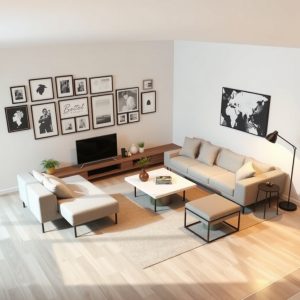
Minimalism as a design movement emerged in the mid-20th century, drawing inspiration from Japanese aesthetics and the Bauhaus principle that form should follow function. At its core, minimalist design is about reducing visual noise to create environments that feel open, airy, and unburdened. This doesn’t mean living in a stark, empty room—far from it. Instead, it’s about curating a space where each element, from furniture to decor, has a reason for being there. The result is a home that feels both expansive and intimate, a sanctuary from the chaos of the outside world.
One of the most compelling aspects of minimalist design is its versatility. Whether you’re drawn to the warmth of earthy color palettes or the sleek lines of matte black hardware, minimalism can adapt to your personal style while maintaining its core principles. The key is to focus on quality over quantity, choosing pieces that are not only beautiful but also durable and meaningful. This approach not only enhances the aesthetic of your space but also aligns with the growing demand for sustainable interior design.
Sustainable Materials: The Heart of Modern Minimalism
Sustainability and minimalism go hand in hand. Both philosophies emphasize mindful consumption and a respect for resources. In minimalist living rooms, this often translates to the use of natural, eco-friendly materials like reclaimed wood, bamboo, linen, and organic cotton. These materials not only reduce environmental impact but also add texture and warmth to a space, preventing it from feeling cold or sterile.
For example, a sofa upholstered in organic linen or a coffee table crafted from reclaimed oak can serve as the foundation of a minimalist living room. These pieces bring a tactile quality to the space, inviting touch and creating a sense of connection to the natural world. Additionally, sustainable materials often age beautifully, developing a patina that tells a story over time. This contrasts sharply with fast furniture, which is designed to be disposable and lacks the character that comes with well-made, enduring pieces.
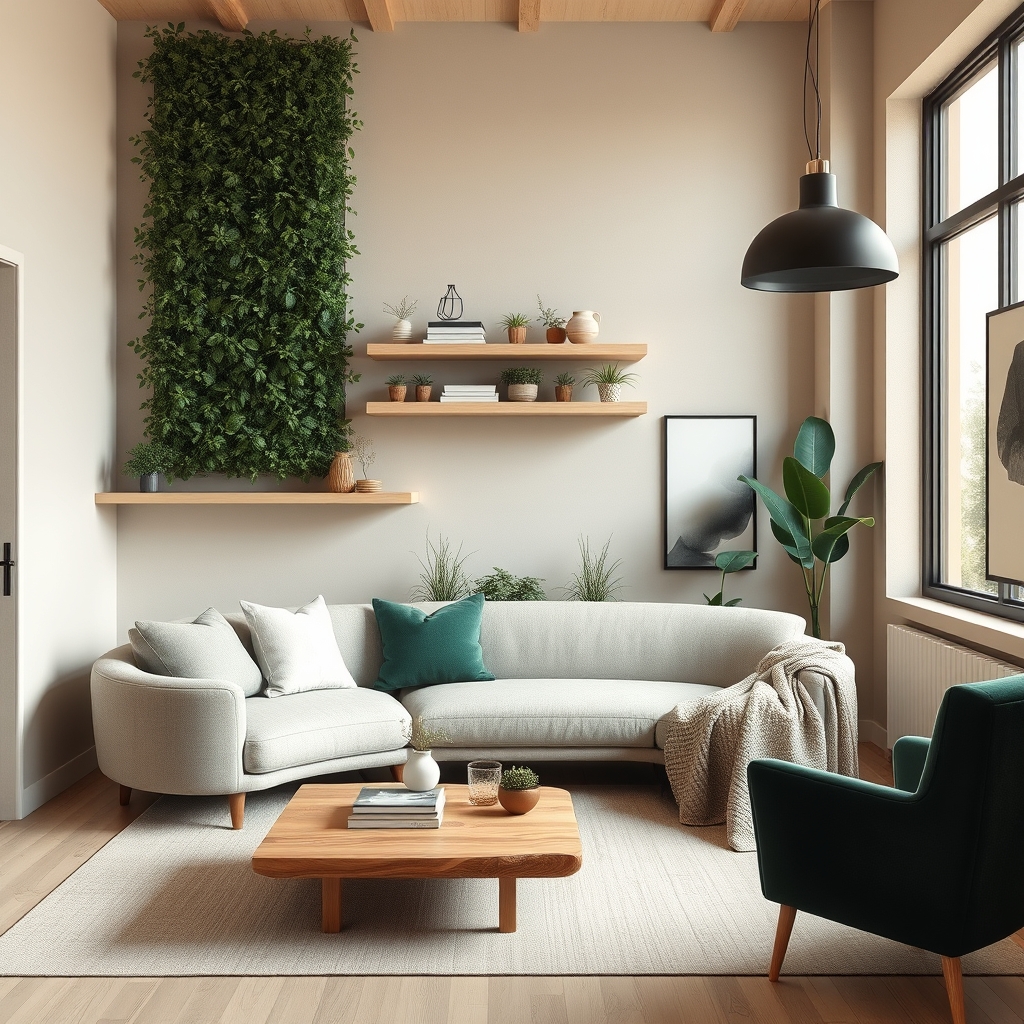
Another way to incorporate sustainability into minimalist design is through biophilic decor. Indoor garden walls, for instance, not only purify the air but also introduce a dynamic, living element to a room. They can be as simple as a few potted plants arranged on floating wall shelves or as elaborate as a vertical garden covering an entire wall. Either way, they reinforce the connection between indoor and outdoor spaces, a hallmark of biophilic design.
The Role of Color in Minimalist Spaces
Color plays a crucial role in minimalist design, often serving as the backbone of the space’s aesthetic. Earthy color palettes—think warm beiges, soft grays, muted greens, and deep browns—are particularly popular because they evoke a sense of tranquility and grounding. These tones create a neutral canvas that allows furniture and decor to stand out without overwhelming the space. They also have the added benefit of making a room feel larger and more open, which is essential in minimalist design.
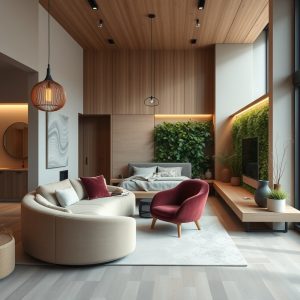
For those who crave a bit more vibrancy, accent colors can be introduced through textiles, artwork, or statement lighting fixtures. A velvet accent chair in a rich, jewel-toned hue or a bold piece of abstract art can add depth and personality to a minimalist room without disrupting its serene atmosphere. The key is to use color sparingly, ensuring that it enhances rather than competes with the overall design.
Furniture with Purpose: The Beauty of Multi-Functional Pieces
In minimalist living rooms, every piece of furniture should serve a purpose, and ideally, more than one. Multi-functional spaces are a cornerstone of minimalist design, particularly in smaller homes or apartments where square footage is limited. A curved sofa with built-in storage, for example, can provide seating, hide clutter, and even double as a guest bed. Similarly, a coffee table with drawers or shelves can offer additional storage while maintaining a clean, uncluttered look.
Floating wall shelves are another excellent example of multi-functional design. They provide storage and display space without taking up floor space, making them ideal for minimalist living rooms. These shelves can be used to showcase books, plants, or decorative objects, adding personality to the room while keeping surfaces clear. When arranged thoughtfully, they can also create visual interest and draw the eye upward, making the room feel taller and more spacious.
Lighting: The Unsung Hero of Minimalist Design
Lighting is often overlooked in interior design, but in minimalist spaces, it plays a pivotal role. The right lighting can enhance the mood of a room, highlight architectural features, and even make a space feel larger. Statement lighting fixtures, such as a sculptural pendant light or a sleek floor lamp, can serve as a focal point in a minimalist living room, adding a touch of drama without overwhelming the space.
Natural light is equally important in minimalist design. Large windows, sheer curtains, and strategically placed mirrors can maximize the flow of natural light, creating a bright and airy atmosphere. If natural light is limited, layered lighting—combining ambient, task, and accent lighting—can achieve a similar effect. For example, a combination of recessed lighting, a floor lamp, and a small table lamp can create a warm, inviting glow that enhances the room’s minimalist aesthetic.
Minimalist living rooms are more than just a trend—they’re a reflection of a lifestyle that values simplicity, sustainability, and mindful living. By focusing on quality over quantity, embracing natural materials, and designing with intention, you can create a space that feels both timeless and deeply personal. It’s not about living with less for the sake of it, but about making room for what truly matters, whether that’s a cozy reading nook, a piece of art that speaks to you, or simply the joy of a space that feels like home. The beauty of minimalism lies in its ability to adapt, to evolve with you, and to remain a sanctuary no matter how the world outside may change.