Smart Kitchens and Sustainable Style: How Technology Meets Earth-Friendly Design
The modern kitchen is no longer just a place for cooking—it’s a hub of innovation, sustainability, and style. As homeowners increasingly prioritize eco-conscious living without sacrificing convenience, the fusion of smart kitchen technology and sustainable interior design has become a game-changer. This evolution transforms how we interact with our spaces, blending cutting-edge functionality with earth-friendly aesthetics.
The Rise of Smart Kitchen Technology
Smart kitchen appliances are revolutionizing the way we prepare meals, manage waste, and conserve energy. From voice-activated faucets that dispense precise water measurements to refrigerators that track food freshness and suggest recipes, technology is making kitchens more intuitive. Induction cooktops, for example, not only reduce energy consumption but also offer precise temperature control, making them a favorite among eco-conscious chefs. Meanwhile, smart ovens with self-cleaning features and energy-efficient modes align perfectly with sustainable living goals.
Beyond appliances, integrated systems like smart lighting and automated ventilation ensure that energy is used only when needed. Motion-sensor faucets and LED lighting under cabinets reduce water and electricity waste, while smart thermostats help maintain optimal temperatures without overworking HVAC systems. These innovations don’t just save resources—they also streamline daily routines, making the kitchen a more efficient and enjoyable space.
Sustainable Materials: The Foundation of Eco-Friendly Design
While technology enhances functionality, sustainable materials ground the kitchen in an earth-friendly ethos. Reclaimed wood cabinetry, bamboo countertops, and recycled glass backsplashes are just a few examples of how designers are reducing environmental impact without compromising on style. These materials not only add warmth and texture but also tell a story—each scratch, grain, or imperfection carries a history that mass-produced alternatives lack.
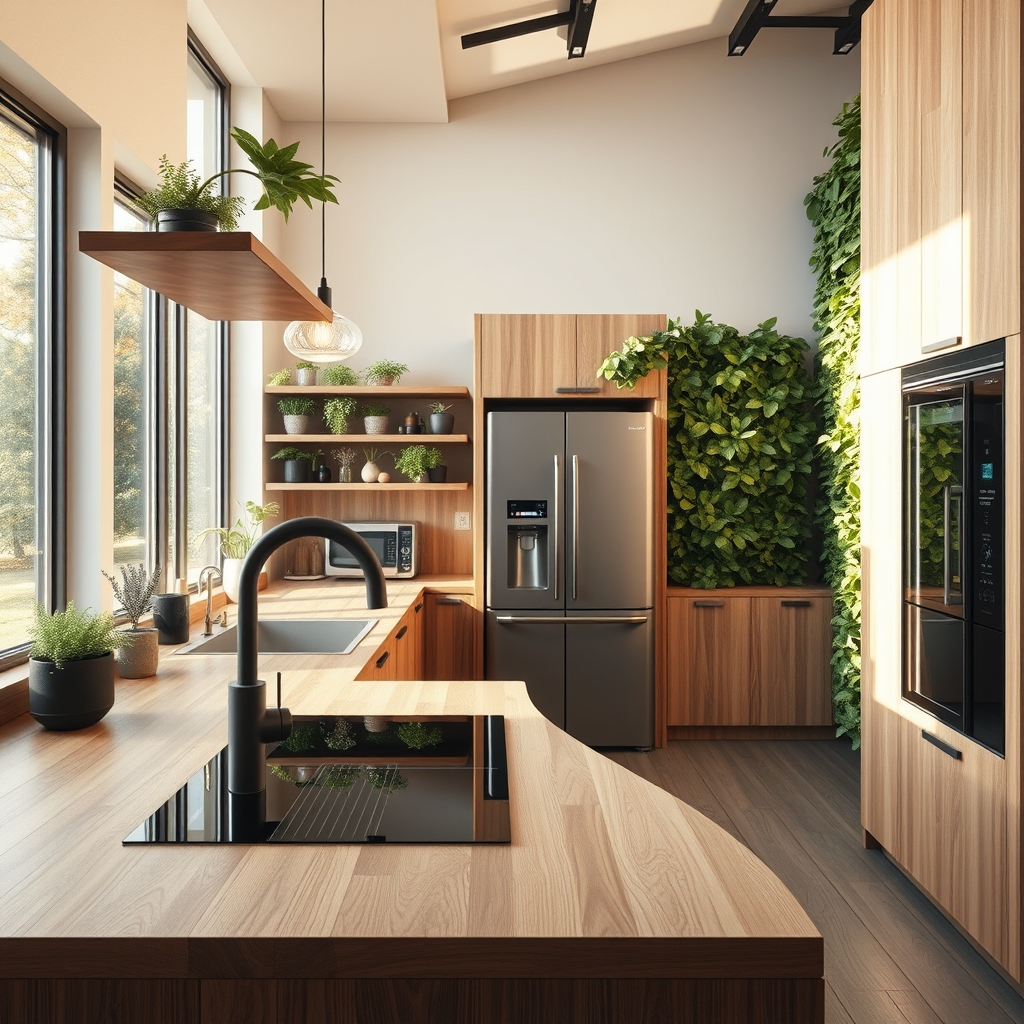
For those who prefer a sleeker look, matte black hardware and minimalist floating shelves made from sustainably sourced wood or recycled metals offer a contemporary edge. Even small details, like compostable dishware or biodegradable cleaning products, contribute to a kitchen that’s as kind to the planet as it is to its inhabitants. The key is to choose materials that are durable, non-toxic, and responsibly sourced, ensuring that the space remains beautiful and functional for years to come.
Biophilic Design: Bringing Nature Indoors
No sustainable kitchen is complete without a touch of biophilic design. Indoor herb gardens, vertical plant walls, and large windows that flood the space with natural light create a connection to nature that enhances well-being. Even in urban settings, small potted plants or a windowsill garden can introduce greenery, improving air quality and adding a refreshing visual element.
For those with more space, open shelving can double as a display for potted plants or hanging gardens, while textured wallpapers with organic patterns—like leaf motifs or stone textures—add depth without overwhelming the space. The goal is to create a kitchen that feels alive, where every element, from the materials to the decor, fosters a sense of harmony with the natural world.
Multi-Functional Spaces: Efficiency Meets Aesthetics
As homes become smaller and more adaptable, multi-functional kitchens are gaining popularity. Islands with built-in storage, pull-out pantries, and convertible dining tables allow the space to serve multiple purposes—whether it’s meal prep, entertaining, or even remote work. Hidden storage solutions, like under-counter drawers or ceiling-mounted racks, keep clutter at bay while maintaining a clean, minimalist aesthetic.
Statement lighting fixtures, such as pendant lights with recycled glass shades or matte black chandeliers, add personality while illuminating workspaces. Meanwhile, curved countertops and ergonomic layouts ensure that the kitchen remains comfortable and accessible, even during long cooking sessions. The result is a space that’s as practical as it is stylish, where every design choice serves a purpose.
The Future of Kitchen Design: Where Tech and Sustainability Collide
The intersection of smart technology and sustainable design is redefining what it means to have a modern kitchen. As innovations continue to emerge—like AI-powered waste reduction systems or solar-powered appliances—the possibilities for creating a space that’s both high-tech and eco-friendly are endless. The best part? These advancements don’t require sacrificing style. Whether it’s through the warmth of reclaimed wood, the sleekness of matte black hardware, or the vibrancy of indoor plants, sustainable kitchens can be as visually stunning as they are functional.
Ultimately, the kitchen of the future is one that works in harmony with its inhabitants and the planet. By embracing smart technology and sustainable materials, homeowners can create a space that’s not only efficient and beautiful but also a reflection of their values. It’s a place where every meal prepared, every conversation shared, and every moment spent feels like a step toward a more thoughtful way of living.