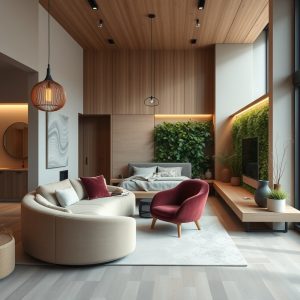
The Soul of the Home: Crafting Living Spaces with Japandi Simplicity, Biophilic Warmth, and Hidden Intelligence
In a world where the boundaries between work, rest, and play increasingly blur within the walls of our homes, the spaces we inhabit must do more than just function—they must nurture. The modern living room is no longer a static showcase of furniture and decor; it is a dynamic sanctuary that balances aesthetics, sustainability, and emotional well-being. At the heart of this transformation lies a harmonious fusion of Japandi minimalism, biophilic design, and intelligent functionality, creating environments that feel both timeless and deeply personal.
The Philosophy of Japandi: Where Less Becomes More
Japandi design, a seamless blend of Japanese wabi-sabi and Scandinavian functionality, has emerged as a beacon of understated elegance in contemporary interiors. This aesthetic is rooted in the belief that beauty lies in simplicity, imperfection, and the thoughtful use of natural materials. In a Japandi living room, every piece of furniture and decor serves a purpose, eliminating clutter while fostering a sense of calm.
Key to this style is the use of clean lines, muted color palettes, and organic textures. Think warm wood tones, soft linen fabrics, and handcrafted ceramics that add character without overwhelming the space. Multi-functional furniture, such as modular sofas with built-in storage or extendable coffee tables, aligns perfectly with Japandi principles, ensuring that form never compromises function. The result is a living room that feels open, airy, and effortlessly sophisticated—a retreat from the chaos of the outside world.
Biophilic Design: Inviting Nature Indoors
As urbanization continues to distance us from the natural world, biophilic design offers a way to reconnect with the earth within our own homes. This approach goes beyond merely adding a few houseplants; it integrates natural elements in ways that enhance our psychological and physical well-being. Studies have shown that exposure to nature—even in simulated forms—can reduce stress, improve cognitive function, and boost mood.
Incorporating biophilic design into a living room can be as simple as maximizing natural light through strategically placed windows or skylights. Earthy color palettes, inspired by forests, deserts, and oceans, create a soothing backdrop, while textured wall coverings like grasscloth or reclaimed wood add depth and tactility. Indoor plant styling, from statement fiddle-leaf figs to cascading pothos, introduces life and movement, while natural materials like stone, rattan, and jute ground the space in organic warmth. For those seeking a bolder approach, fluted wall panels or a statement backsplash in natural stone can serve as a focal point, blurring the line between architecture and nature.
Smart Lighting: The Invisible Hand of Atmosphere
Lighting is the unsung hero of interior design, capable of transforming a room’s mood with the flick of a switch. Smart lighting control takes this a step further, allowing homeowners to tailor their environment to their needs with precision and ease. Imagine a living room that adjusts its lighting based on the time of day—soft, warm tones in the evening to promote relaxation, and bright, cool light in the morning to energize the space.
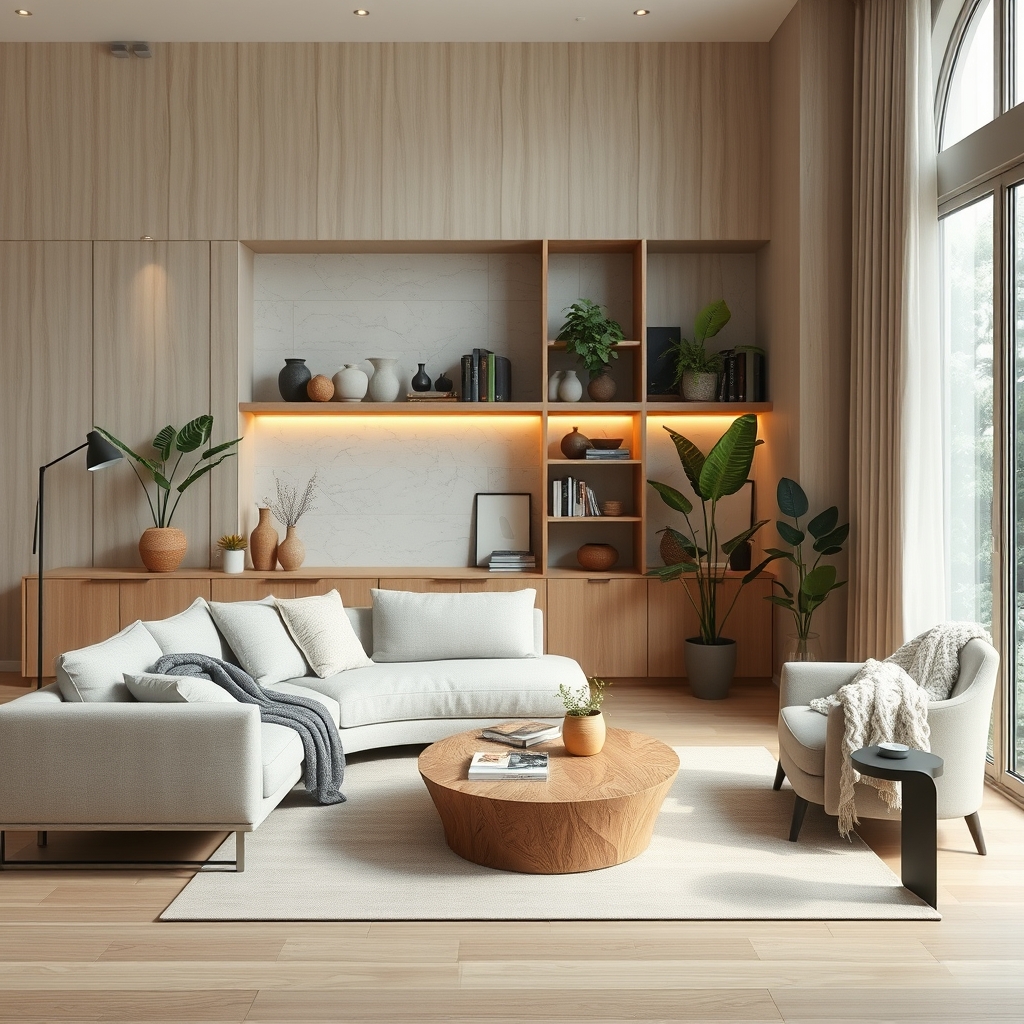
Beyond convenience, smart lighting can enhance the principles of Japandi and biophilic design. Dimmable LED strips hidden beneath shelves or behind furniture create a soft glow that mimics the warmth of candlelight, while tunable white bulbs can replicate the natural progression of daylight. For a more immersive experience, smart systems can sync with circadian rhythms, gradually shifting hues to support the body’s internal clock. The result is a living room that not only looks beautiful but feels intuitively aligned with the rhythms of life.
The Art of Curated Comfort: From Curved Sofas to Cozy Corners
Furniture trends in modern living rooms are shifting toward pieces that prioritize comfort and conversation. The curved sofa, with its inviting, organic shape, has become a staple in contemporary interiors, breaking away from the rigid lines of traditional designs. These sofas not only soften the aesthetic of a room but also encourage intimacy, making them ideal for gatherings or quiet evenings with loved ones.
For those who cherish moments of solitude, a cozy reading corner can transform an underutilized nook into a personal haven. A plush armchair draped with a chunky knit throw, paired with a small side table and a well-placed floor lamp, creates an inviting retreat for book lovers. To elevate the space further, consider vintage aesthetic accents like a mid-century modern sideboard or a collection of antique books, which add layers of history and character. These elements, when thoughtfully curated, tell a story and make the living room feel uniquely yours.
Hidden Intelligence: The Future of Functional Living
As homes become smarter, the demand for seamless integration of technology and design has never been greater. Hidden kitchen storage solutions, such as pull-out pantries or appliance garages, keep countertops clutter-free, while luxury wet rooms with matte black fittings and rainfall showers offer a spa-like experience. In the living room, built-in shelving with concealed lighting or motorized window treatments can enhance functionality without sacrificing style.
Even the smallest details, like fluted wall panels with integrated speakers or coffee tables with wireless charging pads, reflect a growing trend toward invisible technology. These innovations ensure that the living room remains a sanctuary of simplicity, where every element serves a purpose without drawing attention to itself. The goal is not to showcase technology but to create a space where it effortlessly supports daily life.
The modern living room is a canvas for self-expression, a place where design meets intention. By embracing the principles of Japandi simplicity, biophilic warmth, and intelligent functionality, we can create spaces that are not only beautiful but also deeply nourishing. Whether through the soft curve of a sofa, the gentle glow of smart lighting, or the quiet presence of indoor plants, these elements come together to form a home that feels like a living, breathing extension of ourselves. In a world that often feels fragmented, such spaces remind us of the power of harmony—between nature and design, form and function, stillness and movement.